Blog

Notes from the roof

Straight answers to the chimney questions we hear most around Contra Costa County — each piece points to a single relevant service page.
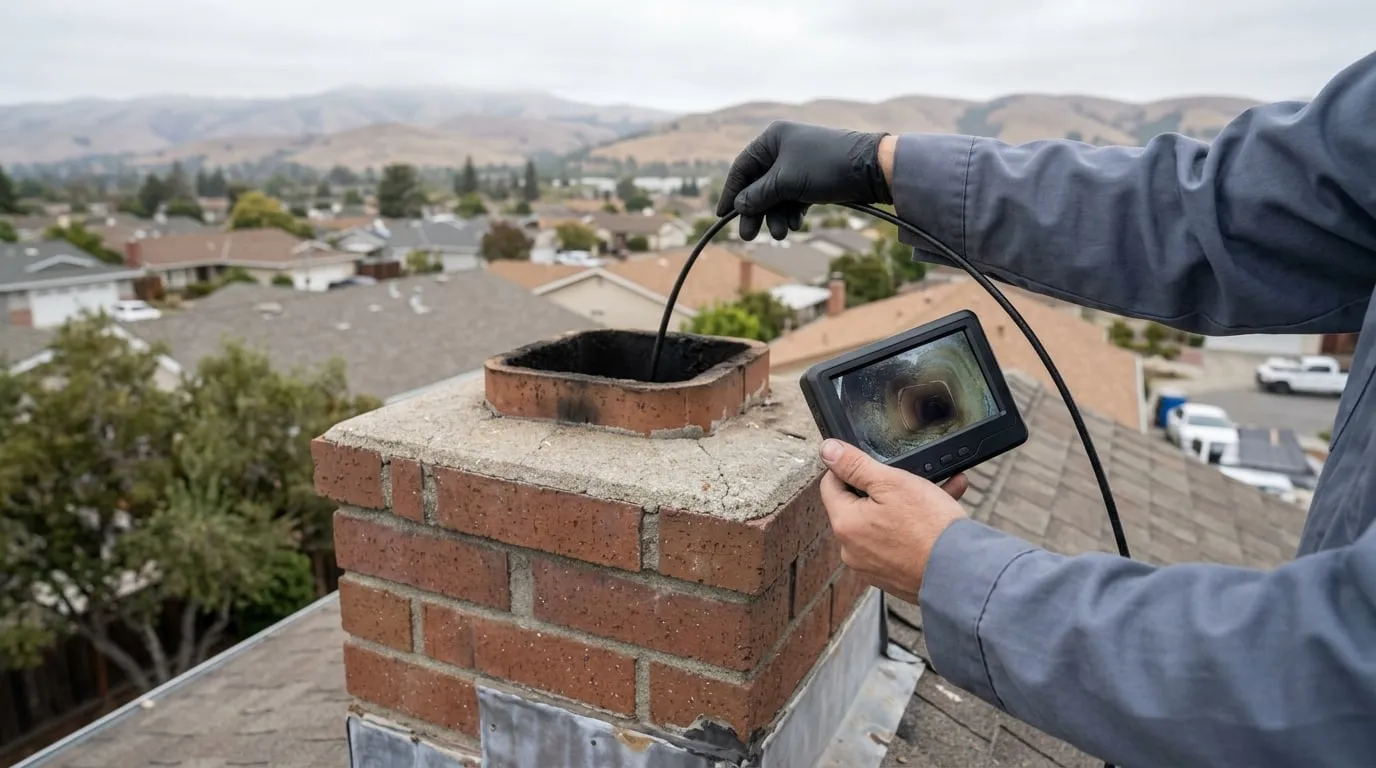
  1. A flexible-rod inspection camera lowered into a flue while a technician watches the live feed on a handheld monitorAugust 2026What a Contra Costa home sale actually requires from a chimney inspectionContra Costa County’s active housing market — from Diablo Valley starter homes to San Ramon Valley move-up buyers — puts a chimney inspection request in front of a lot of sellers and buyers every month. Here is what the request usually means, and what level of inspection actually answers it.
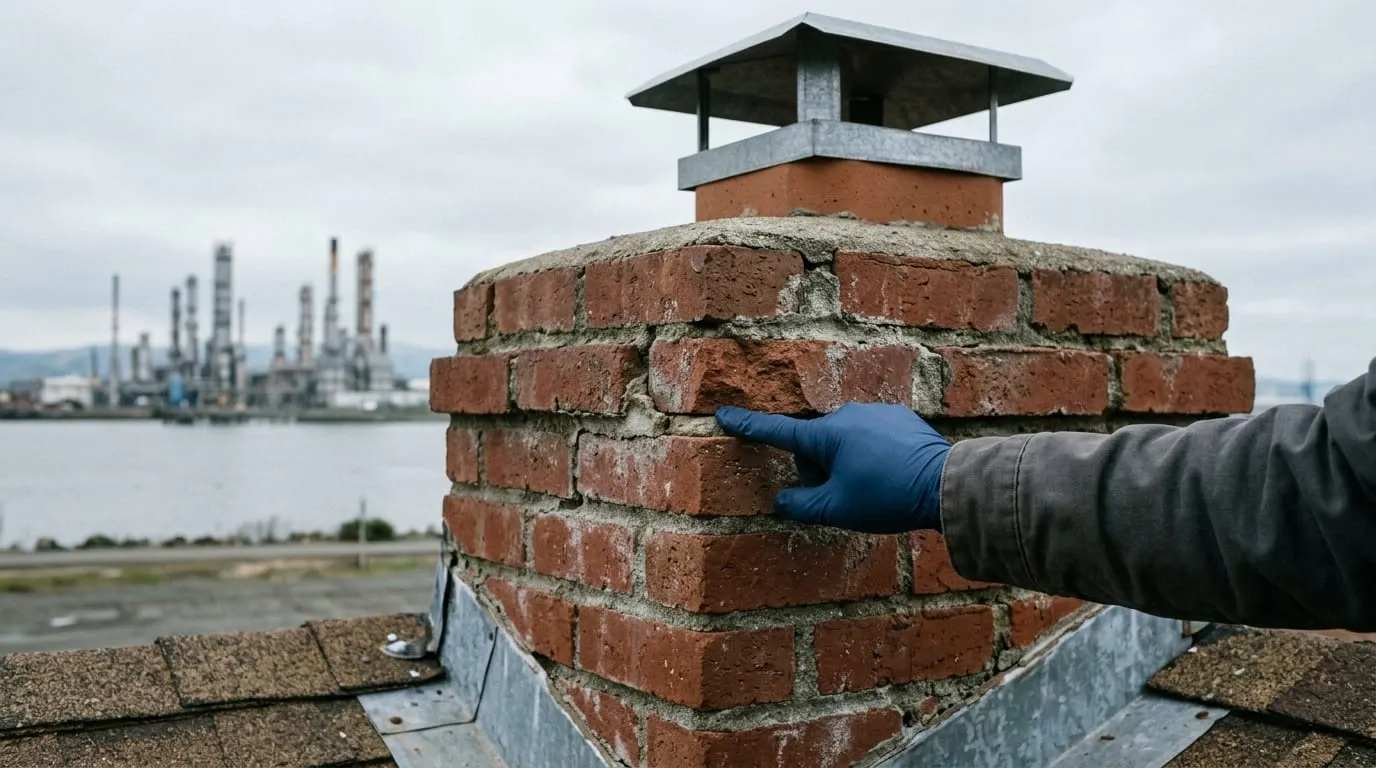
  2. A technician inspecting weathered brick mortar joints on an older waterfront-corridor home near Martinez, industrial refinery stacks visible in the distanceAugust 2026Refinery-corridor air and older masonry: what decades near Martinez and Pittsburg do to a chimneyThe Carquinez Strait corridor through Martinez and Pittsburg has hosted heavy petrochemical industry for over a century, and the region’s air quality restrictions apply countywide. Here is what long-term exposure to industrial air actually does to a masonry chimney, separate from ordinary weathering.
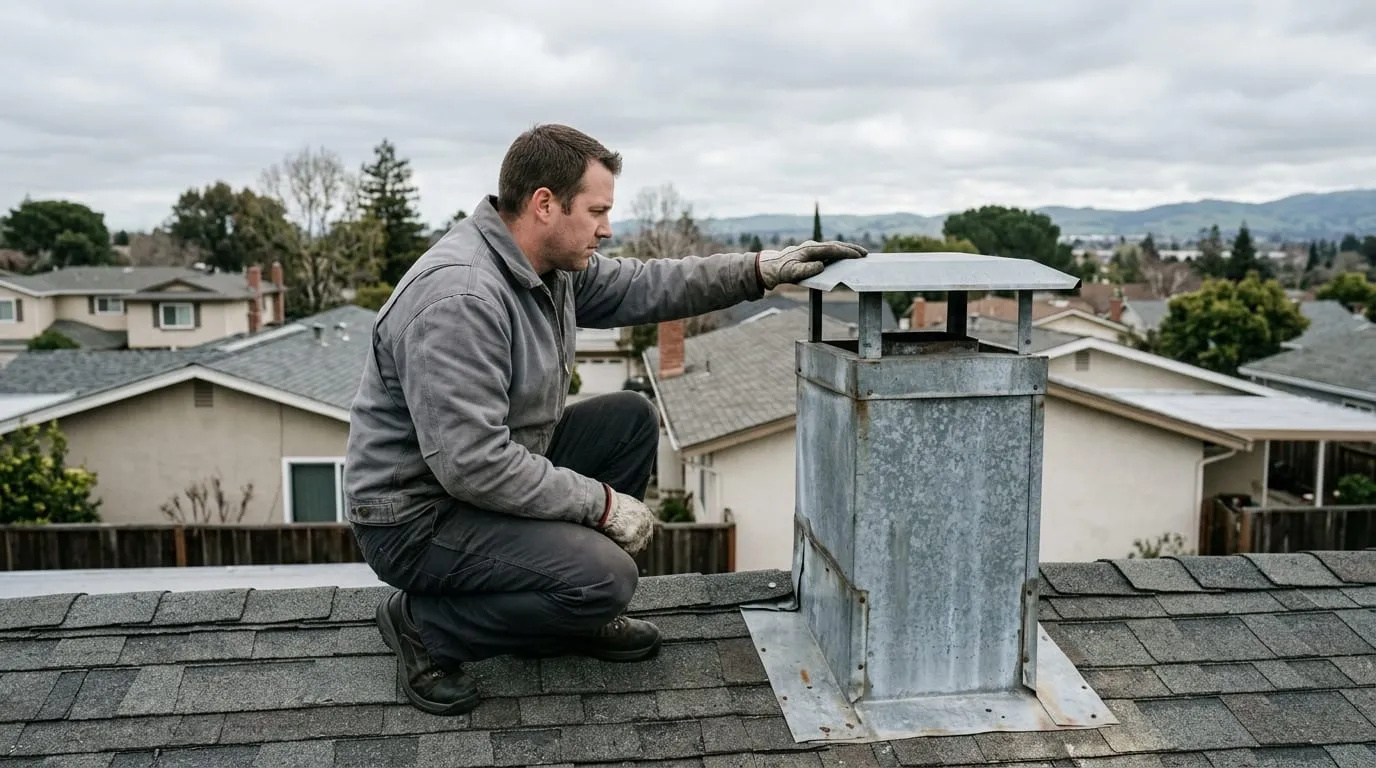
  3. A technician checking the metal chase and cap of a factory-built chimney on a 1970s tract home roofline in Contra Costa CountyAugust 2026The BART-era building boom and what it means for a 1970s Contra Costa chimneyBART reached central Contra Costa County in 1973 and turned a string of towns into commuter suburbs almost overnight, with tract housing built quickly to match. A lot of that housing carries factory-built metal chimneys rather than original masonry, and they age in a completely different way.
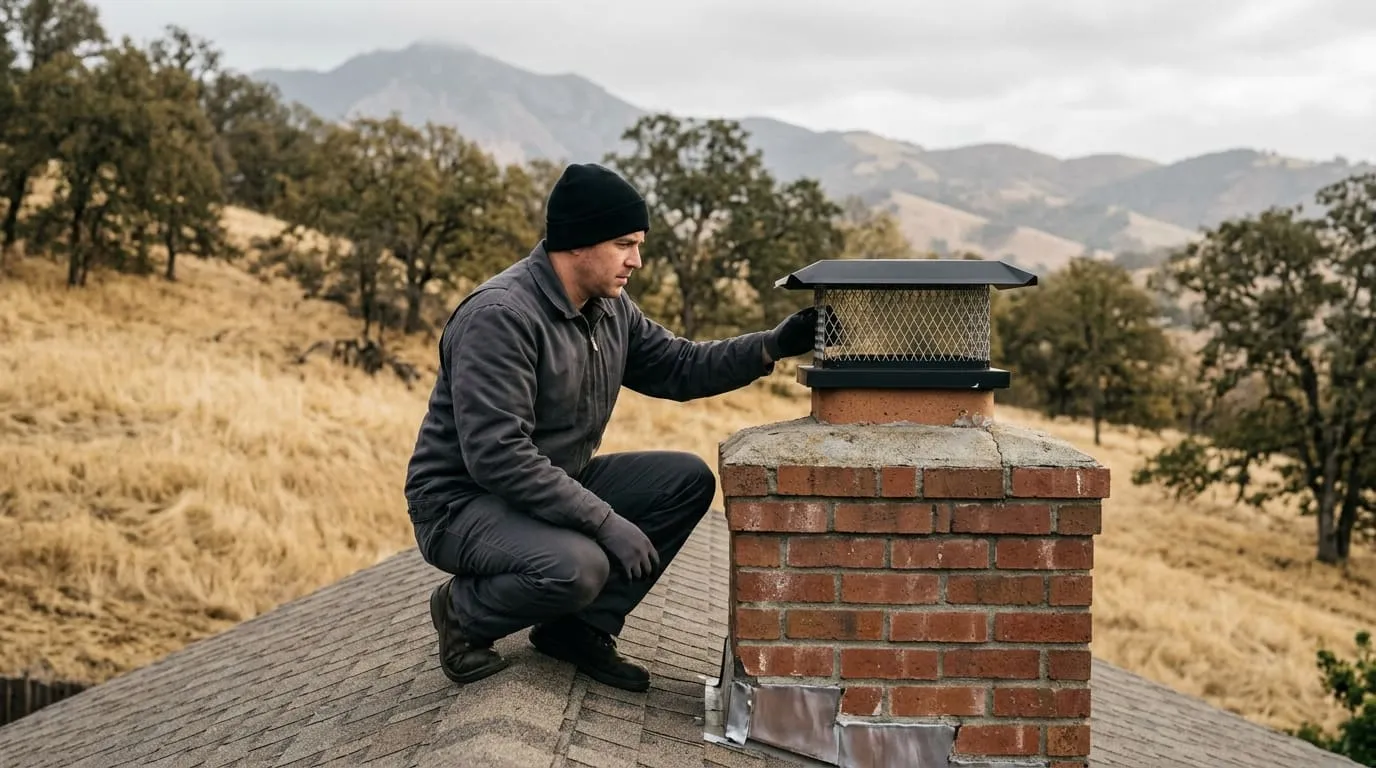
  4. A hillside home near open grassland close to Mount Diablo, with a technician checking a chimney cap against dry vegetation in the backgroundAugust 2026Building near Mount Diablo’s wildland-urban interface: what fire code asks of a chimneyProperties closer to Mount Diablo’s open hillsides — around Clayton, the Diablo foothills and parts of the San Ramon Valley — sit inside what fire code calls a wildland-urban interface, and that carries specific, stricter requirements for anything that vents to the outside, chimneys included.
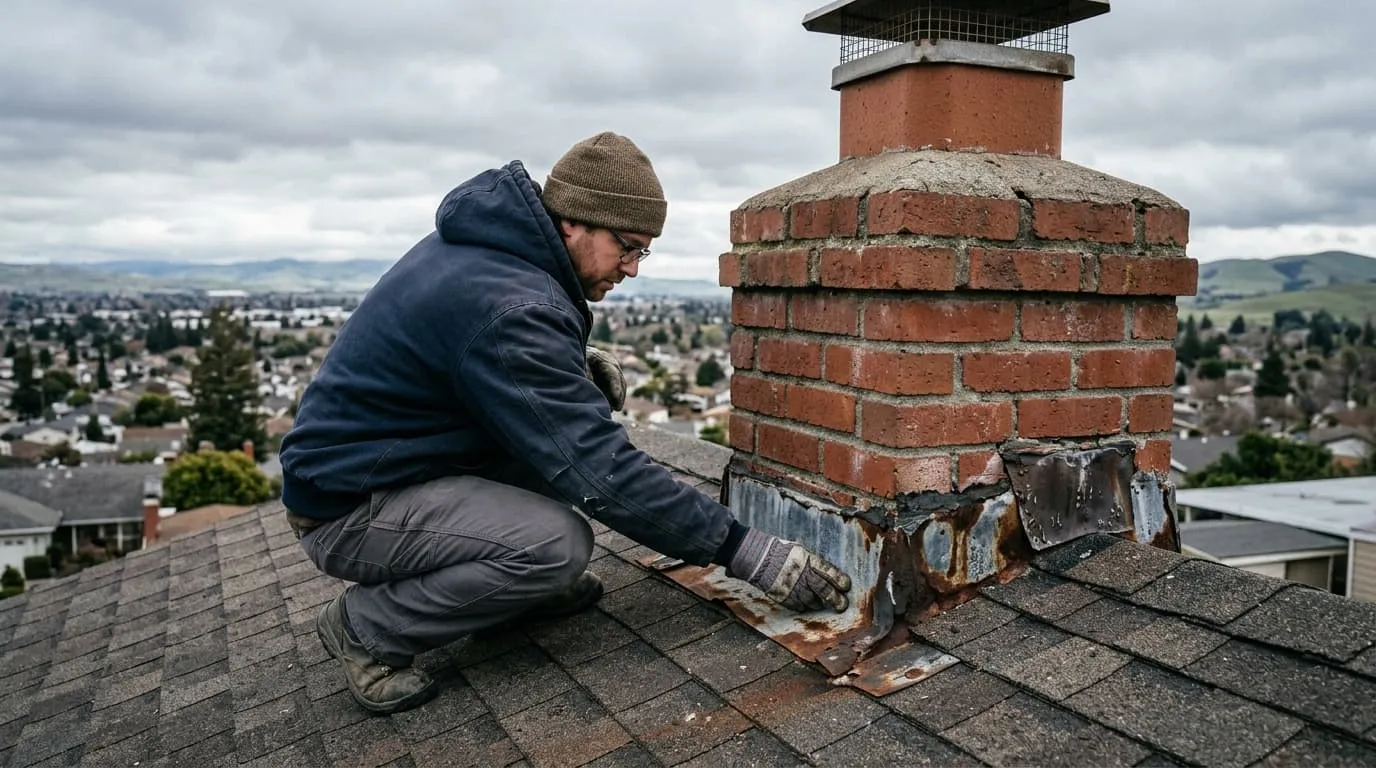
  5. A technician inspecting a corroded metal flashing seam where a chimney meets a shingle roof on an Antioch-area homeAugust 2026Delta humidity, ag dust and what they do to flashing in eastern Contra CostaThe Delta edge of Contra Costa County — Antioch, Pittsburg, Brentwood — runs a noticeably different air pattern from the Diablo Valley core: more humidity swing, more wind-carried dust off surrounding farmland. Here is how that combination specifically wears on a chimney’s flashing seams.
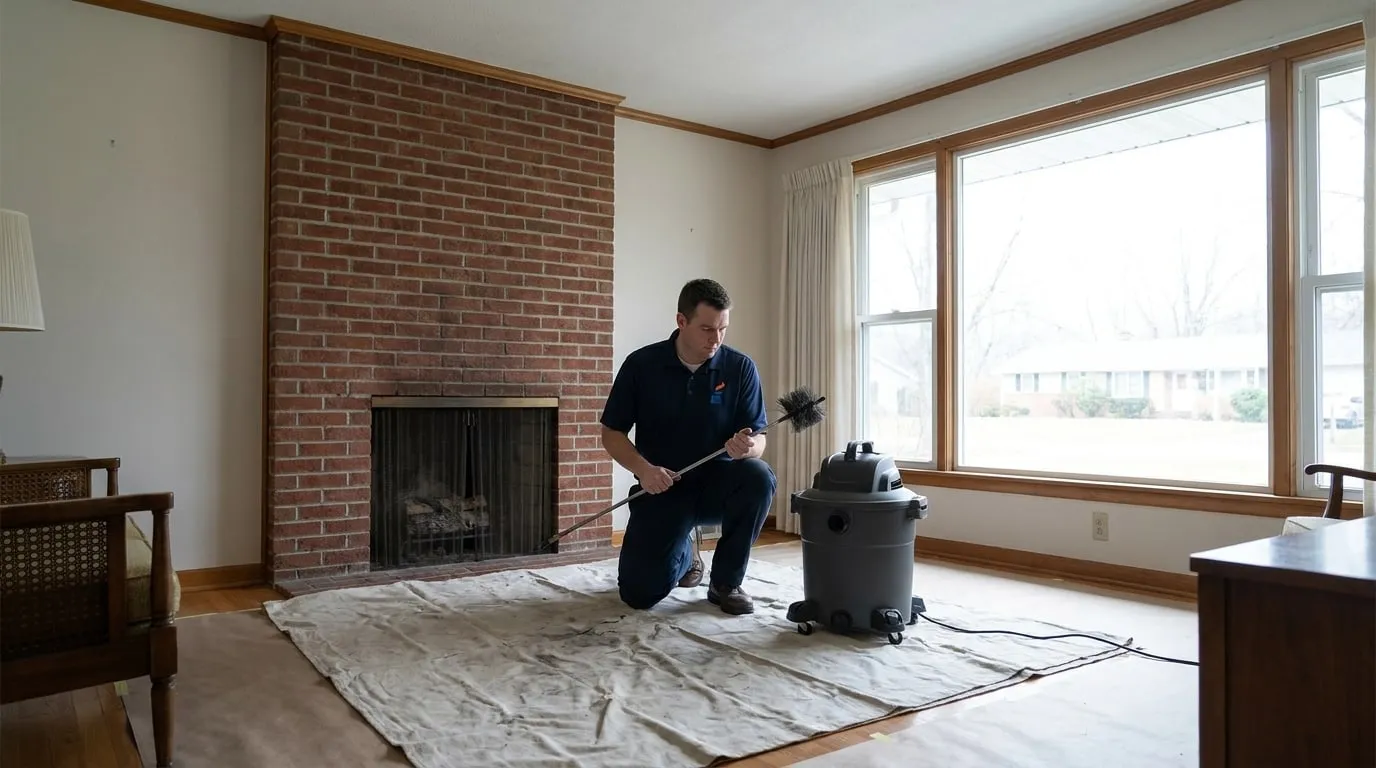
  6. A crew member protecting the hearth of a 1950s Concord ranch home before opening the firebox, drop cloths already down across the living-room floorAugust 2026Why 1950s and 60s Diablo Valley ranch homes need different chimney careConcord and the surrounding Diablo Valley core grew fast around the Naval Weapons Station in the postwar decades, and much of that growth still stands as low-slope ranch homes with original masonry chimneys. Here is what wears on a chimney that old.
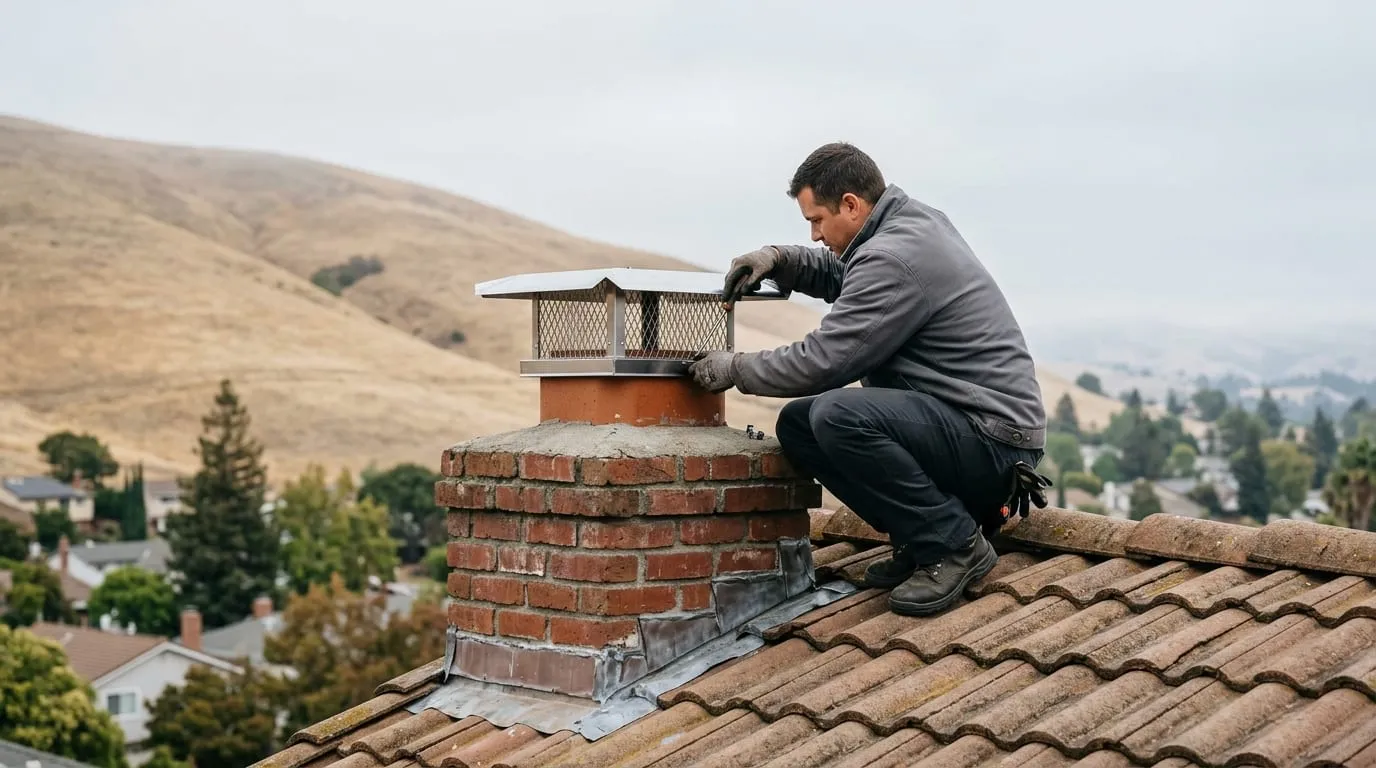
  7. A technician fitting a new stainless steel chimney cap with spark-arrestor mesh on a tile-roofed Concord home, dry hillside visible in the backgroundAugust 2026Diablo winds, ember risk, and what a chimney cap actually has to surviveDiablo winds are Contra Costa County’s defining fall fire-weather event — hot, dry, offshore gusts that test a chimney cap’s mesh in a way still air never does. Here is what actually fails, and why the fix is usually the cheapest part on the chimney.