01Where the creosote actually comes from
Every fire that burns leaves creosote behind — a tar-like film that forms as rising smoke cools against the inside of the flue.
Continue reading
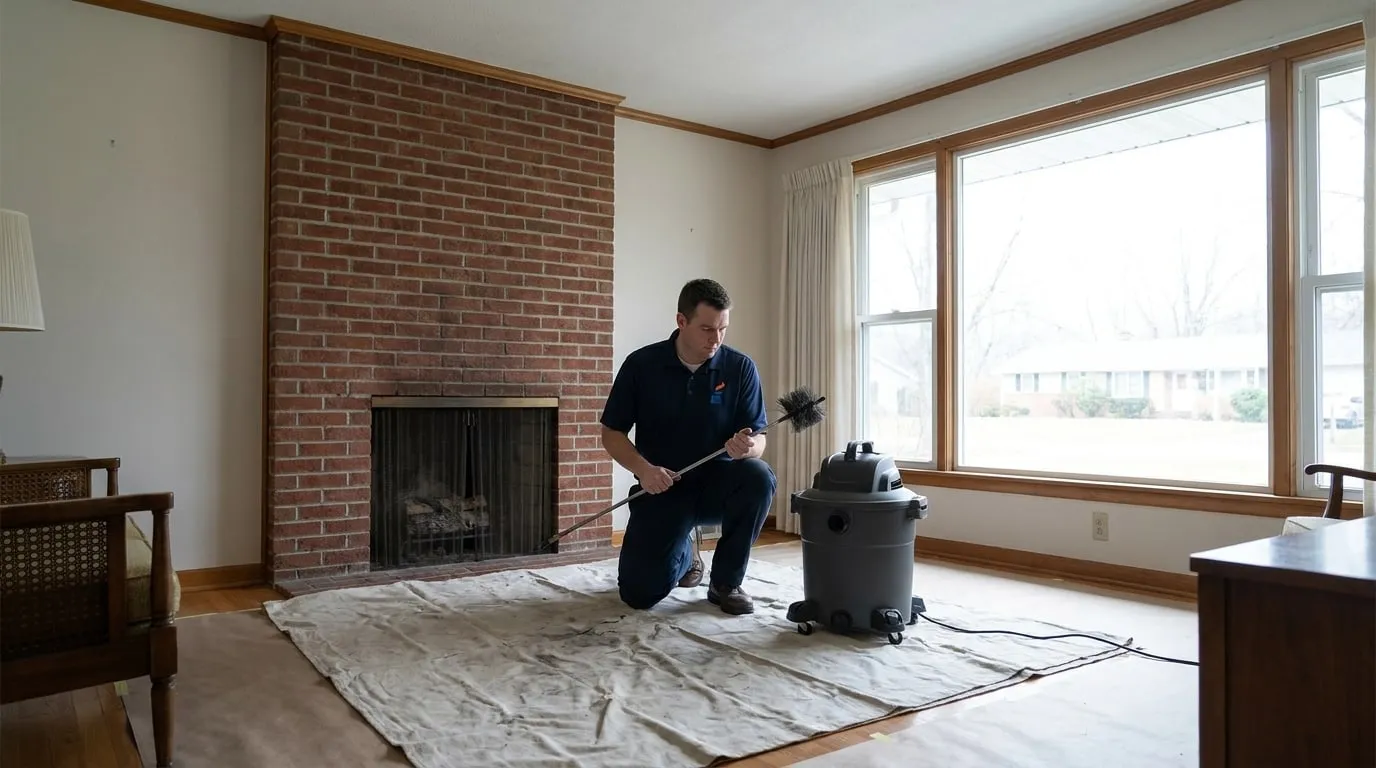
Some amount is unavoidable and harmless. Left to build across a whole season of use, though, it stops being residue and starts being fuel sitting inside a passage that gets hot enough, occasionally, to set it off. Sweeping tackles that mechanically: a brush cut to match the liner’s diameter runs the whole run from firebox to cap, dislodging the buildup so the vacuum can carry it away rather than it stacking on top of last season’s layer.
Concord adds its own wrinkle to the timing. A fireplace here typically goes dark for a stretch of hot, bone-dry summer months, then gets lit again with little warning once the first cool evening arrives. That dormant period is not maintenance — the creosote left from the prior season is exactly as combustible as it was in April, and the first fire on an unswept flue is reliably when we field the most calls about a smell that will not go away.