Chimney repair · Concord

Chimney repair in Concord

A crack in the crown doesn’t automatically mean losing the whole chimney — that’s rarely how it actually goes.

No commitment either way — we call back and settle on a time that works.

  • A written scope with supporting photos before any tool touches the chimney.
  • Fixes matched to whatever actually failed — crown, mortar, flashing or liner, no more.
  • A straightforward job gets a written scope on the spot; anything needing engineering takes longer.
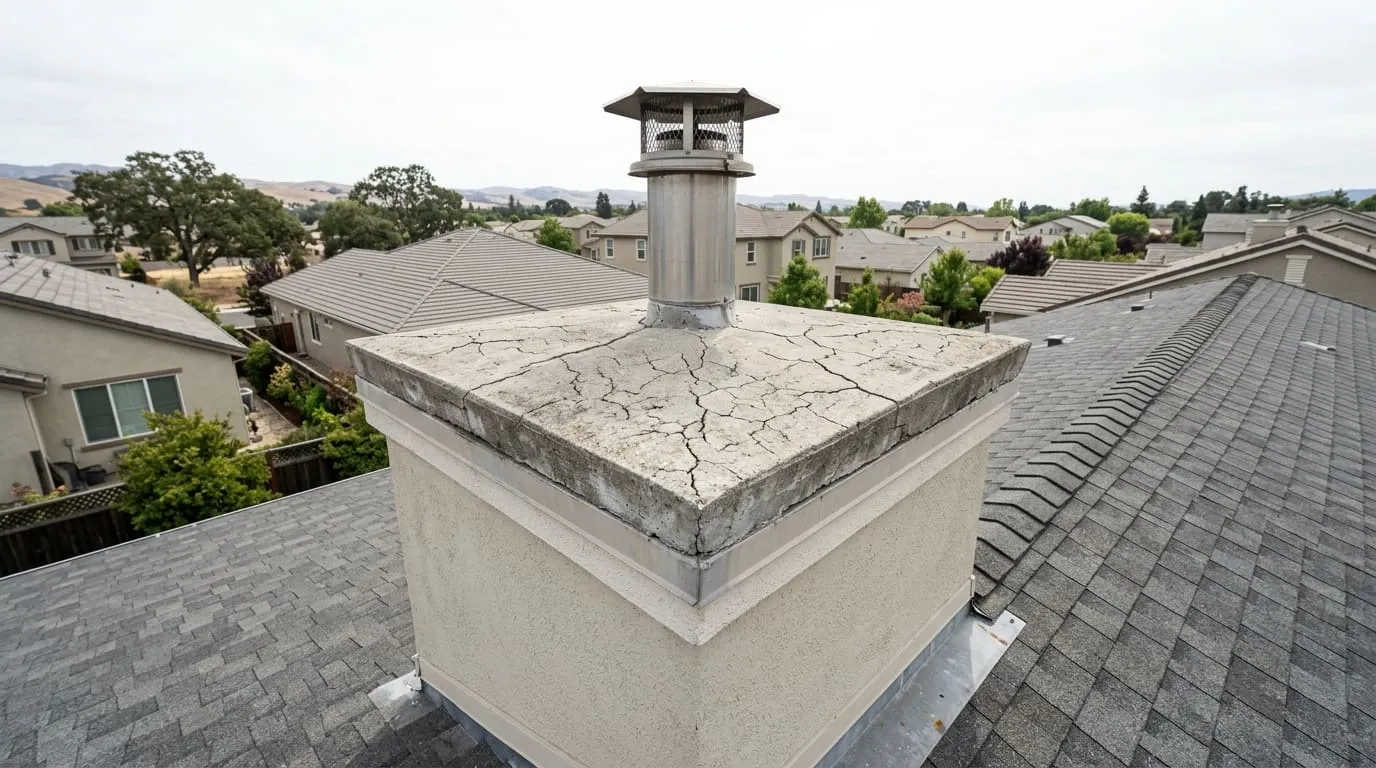
A sun-cracked concrete chimney crown on a Concord-area home, hairline fractures visible in bright afternoon light

What repair covers

Where heat damage actually starts

Crown, mortar, flashing and liner — traced against the same cutaway every service on this site uses.

The short answer

Repair work here almost always traces back to sun exposure, not storms. Months of 90-plus-degree heat expand and contract an exposed masonry crown until it develops hairline cracking on its own — no rain required — and those cracks become the entry point the moment the rainy season finally shows up. Left unaddressed, that water freezes during a cold snap, spalls the brick face, eats mortar from the inside, and can eventually work its way to the flue liner. We diagnose from the top down — crown first, then flashing, mortar and liner — fixing exactly what’s actually broken rather than what’s easiest to sell. A minor hairline crack in an otherwise solid crown gets sealed rather than torn out and redone; genuine structural movement gets an honest structural conversation instead of a quick patch. Everything gets scoped in writing before a single tool comes out.

One masonry stack, sliced open top to bottom: cap and mesh, then the crown, the flue liner threading down through the brick, the mortar between the courses, the roofline flashing, the smoke chamber, and finally the firebox at hearth level.01020304050607
  1. 01Cap and spark arrestor Screens embers, leaf litter and roosting birds from getting into the flue — sized to the mesh opening Concord’s own fire code calls for on a Diablo-wind day.
  2. 02Crown The angled cap poured across the top of the stack. Months of summer heat bake it until it cracks, and that first hairline is where the rainy season gets in.
  3. 03Flue liner Where the exhaust actually travels on its way out. Any breach here is a safety issue to fix right away, never a line item to defer.
  4. 04Mortar joints Hidden inside the wall once the crown starts leaking, this is the layer that quietly erodes while nobody’s watching.
  5. 05Flashing Where the stack punches through the roofline. Track a ceiling stain back far enough and it usually ends here.
  6. 06Smoke chamber The angled space a straight brush cannot reach. A lingering, musty odor after the season’s first fire almost always starts on this ledge.
  7. 07Firebox The single part of the whole setup a homeowner actually glances at without thinking — meaning damage anywhere else tends to surface here dead last.

Book this if you noticed

The usual warning signs

  • A visible crack across the crown, or a ceiling stain near the chimney that showed up after the season’s first real rain.
  • Mortar that’s crumbling, missing outright, or washing out visibly when it rains.
  • Brick faces that are flaking or spalling on the outside.
  • A chimney that leans noticeably or shows a gap where it meets the roofline.

Not sure how serious it is? Call (925) 854-4306 and describe what you have noticed — we will scope a free estimate.

What is included

The repair, scoped plainly

Included

  • Crown repair or a full rebuild with a proper sloped, overhanging drip edge
  • Repointing wherever mortar has eroded or gone missing
  • Flashing replacement at the roofline seam
  • Stainless steel liner installation or repair, sized to your appliance

Not included

  • Surface-only crack sealing on a chimney showing real structural movement — that gets a structural conversation instead
  • Any load-bearing work without the required local permit, which we handle when a job needs one

Every repair gets a written scope before work starts, matched to what actually failed rather than a default full rebuild.

The visit

How a repair estimate actually goes

  1. 1

    Diagnose top to bottom

    Crown, flashing, mortar joints, and where warranted the liner — checked from ground level and from the roof both.

  2. 2

    Put the scope in writing

    You get a written description of what’s actually wrong and what fixing it involves, before anything starts.

  3. 3

    Protect against weather

    When a fix has to wait for a proper work window, the exposed area gets wrapped and tented in the meantime.

  4. 4

    Do the work

    Crown rebuild, repointing, flashing swap or liner work — held to the agreed scope, never expanded without telling you first.

  5. 5

    Verify the fix

    A completed repair gets checked before we call it finished — drainage, seal and fit all confirmed.

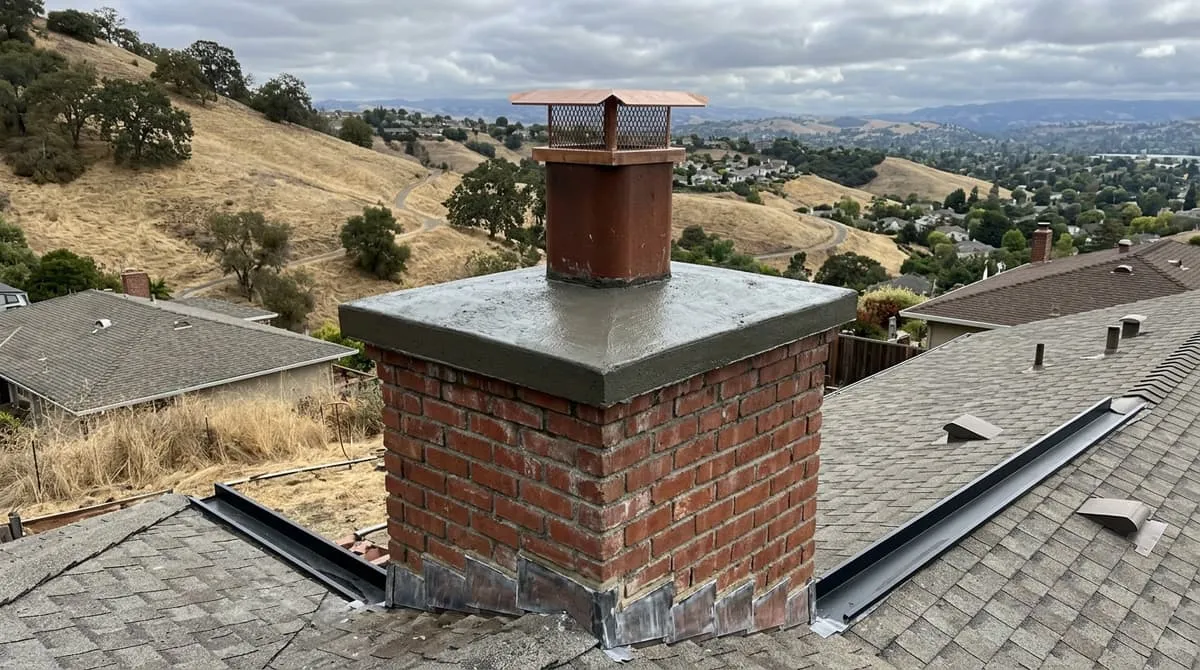
A newly poured chimney crown, sloped to shed water, its drip edge overhanging the brickwork below, photographed from the roofline

What drives a repair

What actually drives a repair

The real variables behind a repair scope, laid out plainly — no pricing attached to any of it.

Most common trigger
Heat-cracked crown or open mortar joint
Regional driver
Months of 90°F+ heat cycling, then winter rain
Fire-season factor
Diablo-wind ember exposure near open space
Permit threshold
Structural or load-bearing work, per local building permit rules
Liner material used
Stainless steel, sized to the appliance

California Fire Code (based on the International Fire Code) and NFPA 211 condition definitions.

In detail

Why it starts at the crown, almost every time

How heat cycling through a Concord summer opens the first crack, and what happens once winter’s rain finds it.

01The crown is where almost everything begins

The crown is the sloped slab capping the stack, poured to throw water clear of both the flue and the masonry underneath.

Continue reading

It’s also the most exposed component on the entire structure — sitting directly under Concord’s summer sun with nothing shielding it. A crown poured flat instead of properly sloped, or one that’s simply aged past its original seal, develops hairline cracking purely from heat expansion and contraction, well before any rain is involved. Those cracks read as cosmetic. They aren’t. The instant a crack opens in the crown, the season’s first serious rainfall sends water straight into the masonry core rather than off the roof where it belongs.

02From there, it works into the mortar

Water that gets past a compromised crown doesn’t sit still — it travels down through the structure along whatever path resists it least, which is nearly always the mortar joints.

Continue reading

Mortar is more porous than brick by nature, and it’s the sacrificial layer in masonry construction on purpose: it’s meant to wear out before the brick does and get replaced on a cycle. In a chimney that’s gone unattended for years, water tracking down from a cracked crown speeds that wear up considerably through the rainy months. Every cold snap after that expands whatever moisture sits trapped in the joint, opening the crack further, and every hot, dry stretch that follows bakes it right back — a cycle that erodes mortar from the inside faster than a gentler, more even climate ever would.

03Flashing gets blamed first, and isn’t always guilty

Flashing — the metal seal at the roofline — genuinely is a frequent source of leaks, which is exactly why it’s the first suspect whenever a homeowner spots a ceiling stain near the chimney.

Continue reading

Sometimes that’s the right call: corroded step flashing, metal that’s pulled loose, or a lazy caulk job standing in for proper lapped flashing are all real, common problems on their own. But flashing failure and crown failure look nearly identical from inside the house, and fixing only the flashing on a chimney whose real issue is a cracked crown means the same leak returns next rainy season. A proper diagnosis checks both, working through them in the order damage would realistically have started — crown, then flashing, then whatever mortar sits between.

04Why the liner is usually the last thing to show damage

It seems like it should be an early warning sign, but water reaching the flue liner — the passage exhaust actually travels through — is typically the LAST stage of damage, not the first, because the liner sits shielded inside the masonry core.

Continue reading

By the time it’s affected, enough has already happened further up the chain — crown, mortar, sometimes flashing too — that the repair has grown well past what it would have been. That’s a big part of why a small heat crack, ignored a season or two here, can turn into a job covering crown, repointing and liner work all at once, when catching it early at the crown alone would have stayed small.

05What Diablo-wind season adds on top

Beyond moisture, Concord’s fall fire-weather pattern brings a second concern: a hot, dry Diablo wind event can drive embers straight at whatever’s exposed on a chimney — a gapped cap, a cracked crown, an open joint near the top of the stack.

Continue reading

On a property closer to open space, that turns what would be a routine maintenance item elsewhere into a real wildfire-exposure point, which is why we check the cap and crown together on every repair visit here, not only the piece that prompted the call.

06Catching it before it shows up indoors

The practical point is that a ceiling stain is a late signal, not an early one.

Continue reading

A visible crack in the crown, discoloration on the brick face just below it, or chalky, thinning mortar are all earlier tells worth acting on before anything appears inside the house. A yearly check — the kind that comes bundled into a standard sweep — catches most of this at the crown or early-mortar stage, ideally toward the end of summer before the rain starts, while it’s still a small fix.

07Booking a repair estimate across Concord and Contra Costa County

If it’s been over a year since the crown, flashing and mortar all got looked at together, that’s worth scheduling ahead of the next rainy season rather than waiting for a stain to appear.

Continue reading

Tell us what you’ve noticed and we’ll put together a free estimate before any work begins.

Reviews

What the last 10 customers actually said

5.0

10 Google reviewscounted 2026-08-26

  • 510
  • 40
  • 30
  • 20
  • 10
  • Barbara Rhodes

    After a worker cleaned the smoke chamber and swept away baked-on soot from the upper flue walls, the smell of creosote that had been there since the warm summer months was gone.
  • Norma Peterson

    Discolouration on the brick facing led to a deep inspection and sweep, removing concealed creosote pockets behind the lintel, eliminating smoke spilling across the room.
  • Evan Hughes

    Very concerning chimney downdraft caused by strong winds was rectified when the sweep eliminated a substantial soot ring at the crown that had been obstructing the natural exit flow.
  • Kannon Odom

    Our winter parties were about to be ruined by the extreme draft resistance, but a planned sweep found a collapsed inside baffle, cleared the route, and optimized the heat distribution.
  • Daniel Rodriguez

    We cleaned out our wood burning fireplace insert just before winter set in. The airway is wide open, the heat output this season is considerably better.

Read all 10 reviews on Google

Questions

What people ask about repairs

It barely rains here — why does my crown keep cracking?

Because heat is the actual cause, not rain. Months above 90°F expand and contract a masonry crown until it cracks on its own, and those cracks are exactly what the rainy season finds and widens once it arrives.

Do I need a permit for repair work in Concord?

Usually not for repointing or resealing a crown with no structural change involved. Anything touching a load-bearing element or the building envelope needs one regardless of cost, and we’ll flag it clearly if your job crosses that line.

Does a leaning chimney always mean a full teardown?

Not automatically — but it always deserves a genuine structural look rather than a cosmetic fix. We’ll give you a straight answer on which situation applies before proposing anything.

How quickly can repairs happen once something’s found?

Depends on the scope, but weather protection goes up right away if a fix has to wait, so an open crack isn’t taking on more damage while work gets scheduled.

Get a free repair estimate

Tell us what you have noticed and send a photo if you can — we will put the scope in writing before any work starts.

Or call (925) 854-4306 to book directly.

Tell us what changed.

Tell us what the fireplace is doing and what changed. Someone reads every message that comes in.

No commitment either way — we call back and settle on a time that works.

Prefer to talk? Call (925) 854-4306 — we’ll confirm when we can help.