Building near Mount Diablo’s wildland-urban interface: what fire code asks of a chimney
Properties closer to Mount Diablo’s open hillsides — around Clayton, the Diablo foothills and parts of the San Ramon Valley — sit inside what fire code calls a wildland-urban interface, and that carries specific, stricter requirements for anything that vents to the outside, chimneys included.
Published
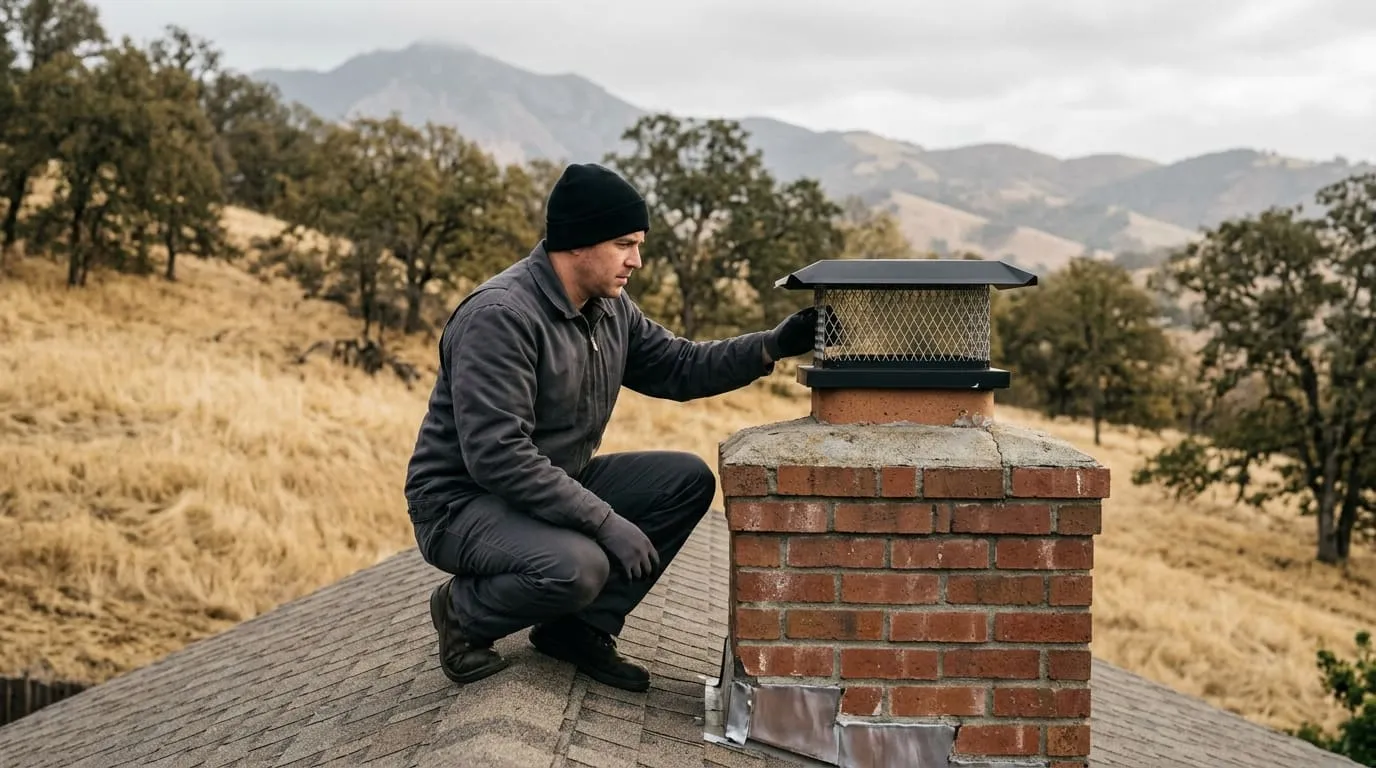
Mount Diablo dominates Contra Costa County’s landscape and its fire risk in equal measure. Properties built closer to its slopes and to the open grassland and oak woodland around them — much of Clayton, parts of Danville and the hillside edges of several other Diablo Valley communities — sit inside what building and fire code calls a wildland-urban interface, or WUI: the zone where developed property and wildland vegetation meet directly, with no buffer of denser urban development in between. That designation is not just a planning label. It carries real, specific requirements for anything on a home that vents to the outside air, and a chimney is exactly that.
What “wildland-urban interface” actually changes
A WUI designation does not rewrite every rule for every part of a house, but it does raise the bar specifically on ember intrusion — the pathway by which a wildfire threatens a structure that is not itself directly in the fire’s path. Embers carried on wind, particularly during a Diablo-wind event, can travel well ahead of any visible flame front and land on or inside anything with an opening. Vents, eaves, and chimney flues are the classic entry points, which is why WUI-adjacent construction faces stricter standards for exactly those components.
Ember-resistant venting, specifically
For a chimney, the practical requirement centers on the spark-arrestor mesh at the cap: correctly sized, in good condition, and rated for the ember-resistant standard that applies to construction in these zones. This is the same mesh-sizing range that applies countywide under the California Fire Code — 3/8 inch to 1/2 inch openings, in 19-gauge galvanized or 24-gauge stainless — but on a WUI property, the condition of that mesh matters more, because the consequence of a gap is measurably higher. We treat mesh condition as a standing check item on every visit to a property in this zone, not just something confirmed at initial cap installation.
Defensible space and what it does not cover
Homeowners near Mount Diablo are generally more familiar with defensible-space requirements — clearing vegetation within a set distance of the structure — than with anything specific to a chimney. Defensible space is real and it matters, but it addresses the ground around a home, not the openings on the home itself. A property with excellent defensible space and a corroded, gapped chimney cap has still left one of the most direct ember pathways wide open. The two requirements work together, not as substitutes for each other.
What this means at time of sale or renovation
A property inside a WUI zone that is being sold, or where any exterior renovation touches the chimney, can trigger a closer look at fire-hardening compliance as part of the transaction or permit process. A Level 2 chimney inspection — the camera-based inspection most Contra Costa real-estate transactions already ask for — is a natural place to confirm cap and mesh condition against the WUI standard at the same time, rather than treating it as a separate check.
Not every Contra Costa property is in this zone
It is worth being specific about this rather than implying every chimney in the county needs to meet WUI-grade standards: central Concord, most of Pleasant Hill and Walnut Creek’s denser neighborhoods, and similar built-up areas away from open hillside are not inside the interface zone, and standard cap and mesh sizing under the general fire code is what applies there. The stricter attention is specifically for properties genuinely adjacent to wildland vegetation — closer to Clayton’s eastern edge, the Diablo foothills, or similar terrain elsewhere in the service area.
What we check on a WUI-zone property
Beyond the standard sweep, inspection or repair scope, a visit to a property in this zone includes a specific look at spark-arrestor mesh condition, cap fit and seal integrity, and — where relevant — whether the existing cap configuration meets the ember-resistant standard the zone calls for, rather than only the general fire-code minimum. We say plainly whether an existing cap already meets that bar or needs an upgrade, rather than assuming either way.
Booking a check near Mount Diablo or the WUI edge
If your property sits close to open hillside — toward Clayton, the Diablo foothills, or a similar interface edge elsewhere in the San Ramon Valley — and nobody has confirmed whether the existing cap meets the ember-resistant standard the zone calls for, that is worth a direct question when you book, not an assumption either way.
Read next
More from the blog
The BART-era building boom and what it means for a 1970s Contra Costa chimney
BART reached central Contra Costa County in 1973 and turned a string of towns into commuter suburbs almost overnight, with tract housing built quickly to match. A lot of that housing carries factory-built metal chimneys rather than original masonry, and they age in a completely different way.
What a Contra Costa home sale actually requires from a chimney inspection
Contra Costa County’s active housing market — from Diablo Valley starter homes to San Ramon Valley move-up buyers — puts a chimney inspection request in front of a lot of sellers and buyers every month. Here is what the request usually means, and what level of inspection actually answers it.
Delta humidity, ag dust and what they do to flashing in eastern Contra Costa
The Delta edge of Contra Costa County — Antioch, Pittsburg, Brentwood — runs a noticeably different air pattern from the Diablo Valley core: more humidity swing, more wind-carried dust off surrounding farmland. Here is how that combination specifically wears on a chimney’s flashing seams.
Confirm your cap meets the WUI standard
Tell us how close the property sits to open space — we will tell you plainly what the existing cap needs.