The BART-era building boom and what it means for a 1970s Contra Costa chimney
BART reached central Contra Costa County in 1973 and turned a string of towns into commuter suburbs almost overnight, with tract housing built quickly to match. A lot of that housing carries factory-built metal chimneys rather than original masonry, and they age in a completely different way.
Published
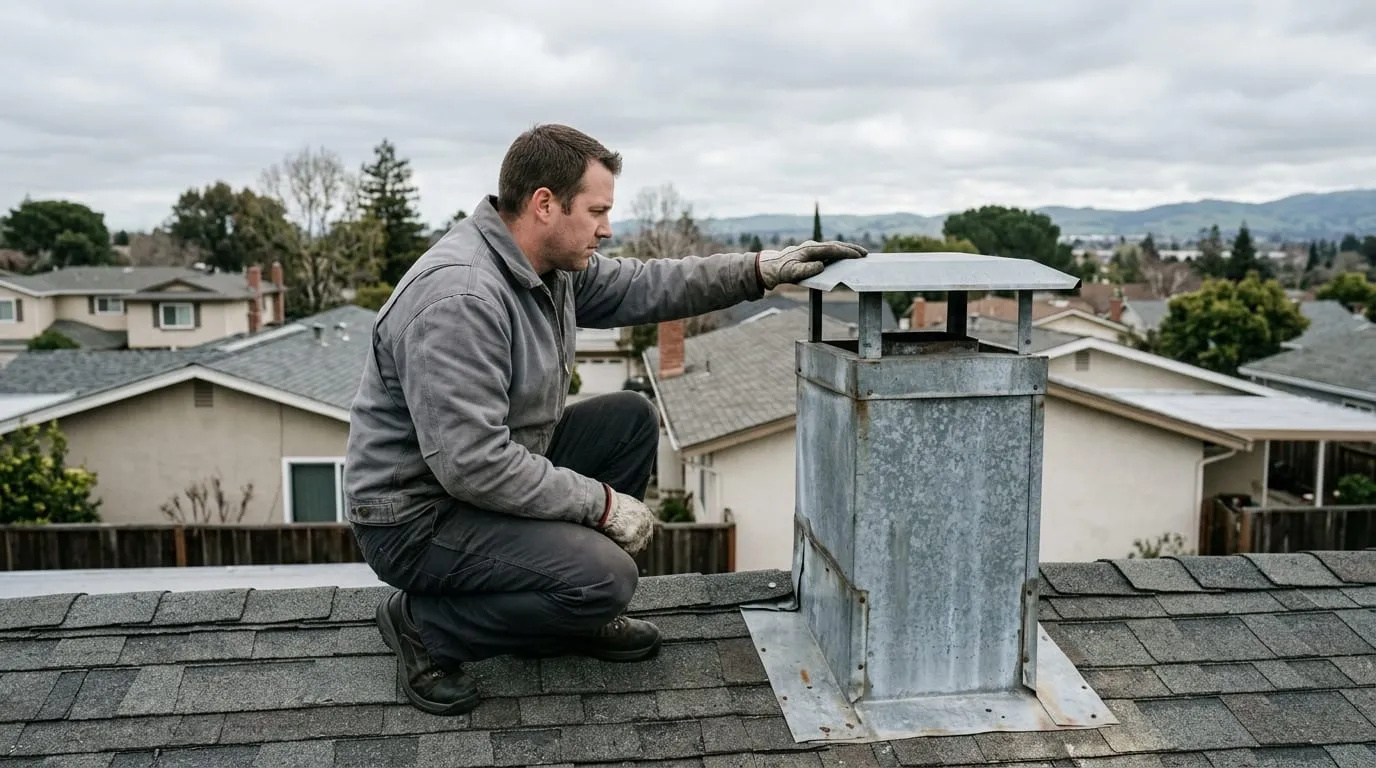
BART’s arrival in central Contra Costa County in 1973 changed the region fast. Towns that had been small commuter-adjacent communities turned into full residential suburbs within a few years, and a wave of tract housing went up to house the demand — much of it in Concord, Pleasant Hill, Walnut Creek and further out along the corridor the line served. A meaningful share of that 1970s-era housing carries a different kind of chimney from its older postwar neighbors: not original brick masonry, but a factory-built metal chimney serving a prefabricated fireplace unit, boxed inside a wood-framed chase.
Why the construction type actually matters
A factory-built chimney and a traditional masonry one are not the same object doing the same job with different materials — they fail in genuinely different ways, and treating one like the other means missing the actual risk. Masonry ages through crown cracking, mortar erosion and flashing failure, all fundamentally about water finding its way through solid material over years. A factory-built system is a manufactured assembly of metal components — the firebox unit itself, sections of double- or triple-wall pipe, and a cap at the top — housed inside a framed wood chase clad to match the house. Its failure points are different: corrosion of the metal components, clearance to combustible framing inside the chase, and the condition of the seals and cap fitting.
What “clearance to combustibles” actually means
Every factory-built chimney system is rated by its manufacturer for a specific minimum clearance between the hot metal flue pipe and any combustible material — typically the wood framing of the chase built around it. That clearance is set for a reason, and it does not change with age, but what can change is whether insulation, framing modifications, or even something as simple as stored items pushed against an attic penetration have compromised it since the home was built fifty years ago. An inspection on one of these systems checks that clearance is intact, not just that the fireplace lights.
The chase itself ages differently than masonry does
The wood-framed chase housing a factory-built chimney is exterior construction like any other wall on the house — sided, flashed at the roofline, and subject to the same weathering as everything else exposed to Concord’s hot summers and wet winters. A chase’s own flashing and siding failing is a genuinely different problem from a masonry crown cracking, even though both can produce a similar-looking water stain indoors. On a fifty-year-old tract home, the chase’s exterior cladding and flashing are frequently well past a typical service interval, independent of whatever condition the metal flue components inside are actually in.
Why the cap and mesh check is identical either way
One thing that does not change between a masonry and a factory-built system is the cap at the very top — both need correctly sized, intact spark-arrestor mesh meeting California fire-code sizing, and both face the same Diablo-wind ember exposure every fall. A factory-built cap is sometimes a proprietary manufacturer part rather than a universal fit, which is worth knowing before ordering a replacement rather than discovering at the point of installation.
What an inspection on a 1970s system actually covers
On a property we know or suspect carries a factory-built chimney, an inspection specifically confirms which type is actually installed — it is not always obvious without opening an access panel — checks visible clearance to framing where the flue passes through the attic, looks at the chase’s exterior condition, and checks cap and mesh fit the same way it would on masonry. We say plainly which type your home has if it was not already documented, since that fact changes what future service actually needs to check.
A straightforward system, when it is maintained as one
None of this means a factory-built chimney is a lesser or riskier choice than masonry — manufactured systems from this era are frequently still sound and functioning exactly as designed, decades on. The point is that maintaining one correctly means checking the things that are actually specific to it, rather than applying a masonry-chimney checklist to a system that does not share masonry’s failure modes.
Booking a check on a BART-era tract home
If your property dates to the 1970s building boom and you are not sure whether the chimney is original masonry or a factory-built system in a framed chase, that is worth confirming at the next scheduled visit — it changes what we specifically look for, not whether we can service it.
Read next
More from the blog
What a Contra Costa home sale actually requires from a chimney inspection
Contra Costa County’s active housing market — from Diablo Valley starter homes to San Ramon Valley move-up buyers — puts a chimney inspection request in front of a lot of sellers and buyers every month. Here is what the request usually means, and what level of inspection actually answers it.
Delta humidity, ag dust and what they do to flashing in eastern Contra Costa
The Delta edge of Contra Costa County — Antioch, Pittsburg, Brentwood — runs a noticeably different air pattern from the Diablo Valley core: more humidity swing, more wind-carried dust off surrounding farmland. Here is how that combination specifically wears on a chimney’s flashing seams.
Diablo winds, ember risk, and what a chimney cap actually has to survive
Diablo winds are Contra Costa County’s defining fall fire-weather event — hot, dry, offshore gusts that test a chimney cap’s mesh in a way still air never does. Here is what actually fails, and why the fix is usually the cheapest part on the chimney.
Get your chimney type confirmed
Tell us the age of your home — we will tell you what to check for on a system built like yours.