What a Contra Costa home sale actually requires from a chimney inspection
Contra Costa County’s active housing market — from Diablo Valley starter homes to San Ramon Valley move-up buyers — puts a chimney inspection request in front of a lot of sellers and buyers every month. Here is what the request usually means, and what level of inspection actually answers it.
Published
Somewhere in most Contra Costa County real-estate transactions — a starter home changing hands in central Concord, a move-up buyer closing on a San Ramon Valley property in Danville or San Ramon — a chimney inspection request shows up in the paperwork, often with very little explanation of what it actually needs to cover. Buyers’ agents ask for it as a standard item; sellers frequently have no idea what level of inspection satisfies it or what the report needs to say.
Why this request exists in the first place
A working fireplace is a genuine selling point on a lot of Contra Costa properties, and it is also a component most buyers have no way to evaluate themselves during a walkthrough. A chimney can look entirely fine from inside the living room — clean firebox, no visible cracks in the brick face — while carrying real issues higher up the flue that only a camera can actually see. The inspection request exists to close that gap between what is visible and what is actually true about the system’s condition.
Level 1 is not the right answer here
NFPA 211 — the national standard chimney inspections are measured against — defines a Level 1 inspection as a visual check of everything reachable without a camera or a roof ladder. That is the right depth for an annual check on a chimney under continued, unchanged use by the same owner. It is not the right depth for a change-of-ownership transaction, because it cannot actually answer the question a buyer is asking: what does the inside of this flue actually look like, and is there anything a surface glance would miss.
Level 2 is what most transactions actually need
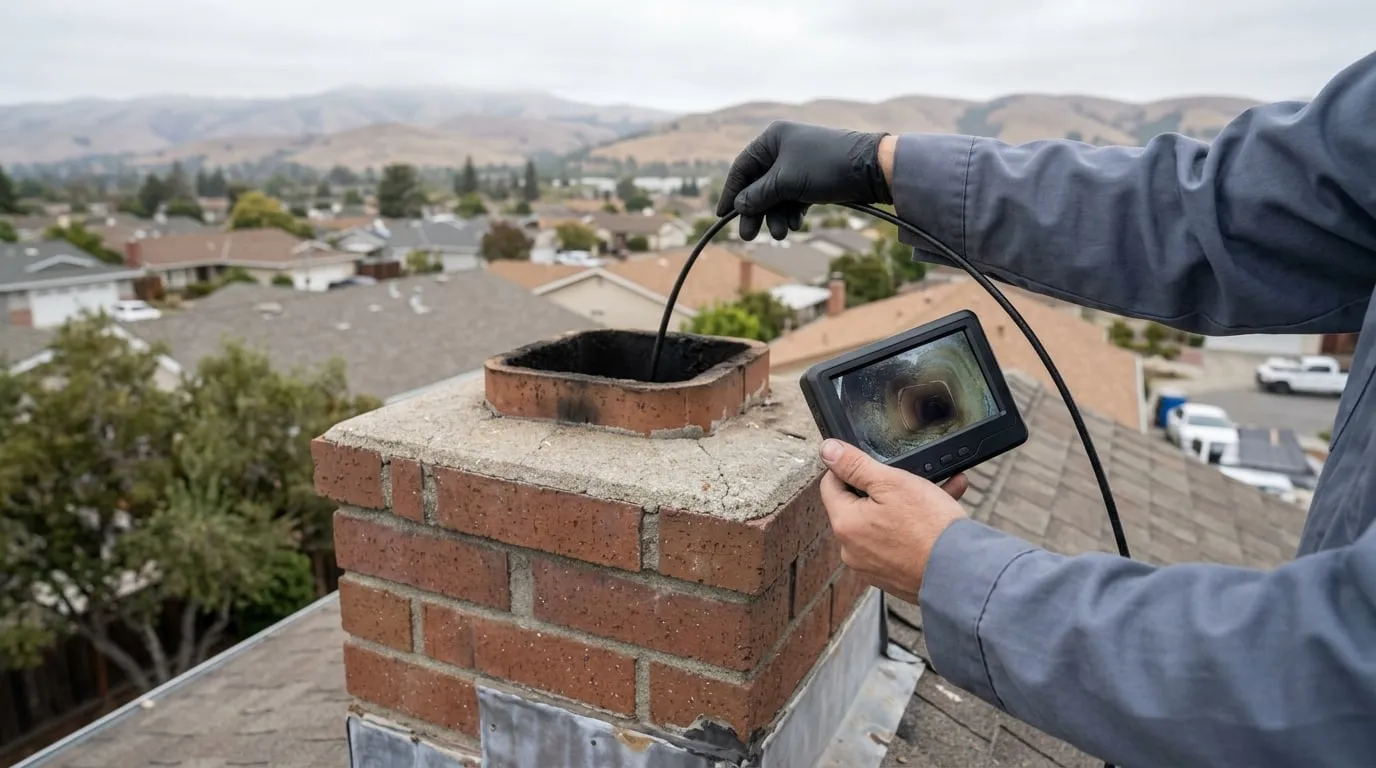
A Level 2 inspection adds a video camera run down the full length of the flue, along with a check of any accessible attic, crawlspace or roof-level area the chimney passes through. That camera footage is what gives a buyer’s agent — or a seller wanting to head off a negotiation surprise — actual evidence of interior condition rather than a surface-level opinion. It is also the right call any time the appliance itself is changing as part of the sale, such as a buyer planning to convert a wood-burning fireplace to gas.
What a useful report actually says
A report that satisfies a real-estate transaction needs to do more than state a pass or fail. It should name the inspection level performed, describe what was actually found — crown condition, mortar condition, liner condition as seen on camera, cap and mesh condition — and separate genuine safety or structural findings from cosmetic or maintenance-level observations that do not affect the transaction. A report that simply says “chimney inspected, no issues found” without naming the level or describing what was checked does not actually answer the question a careful buyer’s agent is asking.
Timing it right in a competitive market
Contra Costa’s housing market moves fast, and a Level 2 inspection scheduled at the last minute before closing can become a scheduling bottleneck if it turns up something that needs a second visit to address. Sellers preparing to list, particularly with an older or original chimney, are often better served booking the inspection proactively — before an offer is even in hand — so any finding can be addressed or at least documented and priced into the listing rather than surfacing as a surprise during a tight closing window.
What this means for a buyer, not just a seller
A buyer receiving a chimney inspection report as part of a disclosure package should know what to actually look for in it: the stated level, specific findings tied to specific components, and photographic or camera evidence rather than a general assurance. A report with none of that is worth a follow-up question before treating the chimney as a settled item in the transaction.
Booking a transaction inspection in Concord and across Contra Costa County
Whether you are listing a Diablo Valley starter home or closing on a San Ramon Valley move-up property, tell us it is for a pending sale when you call — we will scope a Level 2 inspection with a written report built for exactly that purpose, rather than a generic annual check.
Read next
More from the blog
The BART-era building boom and what it means for a 1970s Contra Costa chimney
BART reached central Contra Costa County in 1973 and turned a string of towns into commuter suburbs almost overnight, with tract housing built quickly to match. A lot of that housing carries factory-built metal chimneys rather than original masonry, and they age in a completely different way.
Delta humidity, ag dust and what they do to flashing in eastern Contra Costa
The Delta edge of Contra Costa County — Antioch, Pittsburg, Brentwood — runs a noticeably different air pattern from the Diablo Valley core: more humidity swing, more wind-carried dust off surrounding farmland. Here is how that combination specifically wears on a chimney’s flashing seams.
Diablo winds, ember risk, and what a chimney cap actually has to survive
Diablo winds are Contra Costa County’s defining fall fire-weather event — hot, dry, offshore gusts that test a chimney cap’s mesh in a way still air never does. Here is what actually fails, and why the fix is usually the cheapest part on the chimney.
Book a transaction-ready inspection
Tell us it is for a pending sale — we will scope the right level and put the report in writing.