Why 1950s and 60s Diablo Valley ranch homes need different chimney care
Concord and the surrounding Diablo Valley core grew fast around the Naval Weapons Station in the postwar decades, and much of that growth still stands as low-slope ranch homes with original masonry chimneys. Here is what wears on a chimney that old.
Published
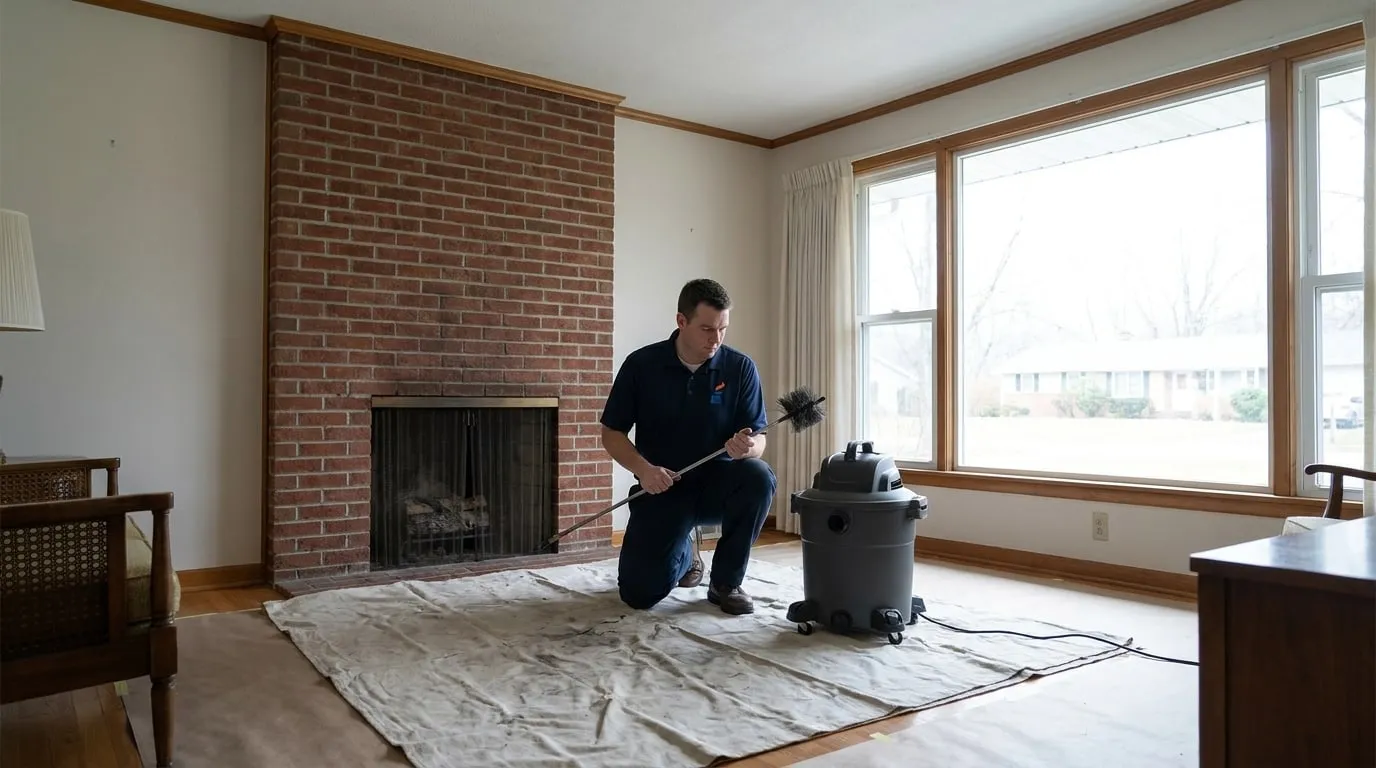
Drive through central Concord, Pleasant Hill or the older sections of Walnut Creek and a lot of what you see is postwar ranch-style construction — single-story, low-slope roofs, built quickly and in volume during the boom years around the Naval Weapons Station and, later, the arrival of BART. A meaningful share of those homes still have their original masonry chimney, now sixty to seventy years old, and a chimney that age does not fail the way a twenty-year-old one does.
Original masonry, decades past its design life
Most masonry construction from the 1950s and 60s was not built with a specific service lifespan in mind the way modern materials are engineered and rated today. Mortar mixes, flashing materials and even brick quality varied more than they do now, and a chimney that has stood for six or seven decades has been through that many cycles of Concord’s hot, dry summers and its wet winters without any of the moisture-barrier improvements that came later. The result is not that these chimneys are inherently unsafe — many are structurally sound — but that the margin for a small problem to stay small is thinner than it is on newer construction.
The low-slope roof problem
Ranch-style construction favored wide, low-pitched rooflines, which look clean but create a specific water-management challenge at the chimney. A steep roof sheds water fast and gives flashing less time to be tested by standing or slow-draining water; a low-slope roof does the opposite. Flashing on a ranch-home chimney often has to work harder, for longer, against water that is not draining away quickly — which means a flashing seal that would hold up fine on a steeper roof elsewhere can fail sooner here.
Why heat matters as much as age
A chimney’s crown — the sloped cap across the very top of the stack — is the most exposed surface on the entire structure, and in Diablo Valley that means months of direct exposure to temperatures reliably above 90°F. Older crowns, especially ones that were never resealed after their original installation, develop hairline cracks from decades of that expansion-and-contraction cycling, independent of any rain damage at all. By the time the rainy season arrives, a crown that has quietly cracked over dozens of hot summers is already primed to let water in on the first real storm.
Factory-built additions on an older masonry base
It is also common on these properties to find a factory-built metal chimney serving a fireplace insert or a later appliance addition, installed alongside — or occasionally instead of — the original masonry. A metal chimney has a different failure profile entirely: rather than crown cracking and mortar erosion, the concerns are corrosion, clearance to combustibles, and the condition of the spark-arrestor cap at the top, which sees the same Diablo-wind ember exposure every other chimney in the area does. Knowing which type is actually on the roof — masonry, factory-built, or both — changes what an inspection needs to check.
What this means for a service visit
On a chimney this old, we do not assume the visible symptom is the whole story. A sweep or inspection on a genuinely original 1950s or 60s chimney gets a closer look at crown condition specifically, because heat-cycling damage this far along does not always show as an obvious crack from the ground. On a property where the roofline is low-slope, flashing gets the same attention. And where a factory-built chimney is present, the check shifts to corrosion and cap condition rather than masonry.
The upside of a chimney this age
None of this is a reason to assume an older Diablo Valley chimney needs immediate, expensive work. Plenty of these structures are sound, well within their functional life, and need nothing more than the same annual sweep and periodic inspection any chimney benefits from. The point is narrower: a sixty-year-old chimney’s problems, when they do show up, tend to be further along than a younger chimney’s would be at the same visible symptom, simply because there has been more time for something small to become something worth addressing. Catching it at the crown-crack stage, rather than after a ceiling stain appears, is the difference between a modest repair and a much larger one.
Booking a check on an older Diablo Valley home
If your home dates to the postwar boom years and nobody can recall the last time the chimney itself — not just the fireplace — was actually looked at, that is worth scheduling before the next rainy season, particularly if the roof is low-slope or the property backs onto open space where wind exposure runs higher.
Read next
More from the blog
The BART-era building boom and what it means for a 1970s Contra Costa chimney
BART reached central Contra Costa County in 1973 and turned a string of towns into commuter suburbs almost overnight, with tract housing built quickly to match. A lot of that housing carries factory-built metal chimneys rather than original masonry, and they age in a completely different way.
What a Contra Costa home sale actually requires from a chimney inspection
Contra Costa County’s active housing market — from Diablo Valley starter homes to San Ramon Valley move-up buyers — puts a chimney inspection request in front of a lot of sellers and buyers every month. Here is what the request usually means, and what level of inspection actually answers it.
Delta humidity, ag dust and what they do to flashing in eastern Contra Costa
The Delta edge of Contra Costa County — Antioch, Pittsburg, Brentwood — runs a noticeably different air pattern from the Diablo Valley core: more humidity swing, more wind-carried dust off surrounding farmland. Here is how that combination specifically wears on a chimney’s flashing seams.
Get an older chimney looked at
Tell us the age and type of your home — we will tell you plainly what to check first.